
Delaware’s roadways see a daily traffic volume, connecting residents and visitors to bustling urban centers like Wilmington, Dover, and Newark. Despite the state’s relatively small size, certain intersections and road segments stand out as persistent trouble spots where crashes occur more frequently. These hotspots not only disrupt traffic but often lead to serious injuries and fatalities, impacting families and communities across Delaware.
Rapid population growth in suburban areas and aging infrastructure strain Delaware’s transportation system. Congestion during peak hours leads to risky driving behaviors such as aggressive lane changes, speeding, and distracted driving. Seasonal weather variations, including heavy rain and occasional snow, further challenge road safety, especially on poorly maintained or designed stretches.
Commercial and freight traffic add complexity to crash patterns. Major highways like I-95 and DE Route 1 see high volumes of trucks and passenger vehicles sharing limited space, increasing the potential for collisions. Pedestrian and cyclist activity near schools, shopping centers, and recreational areas also contributes to the risk, especially where crosswalks and signals are inadequate.
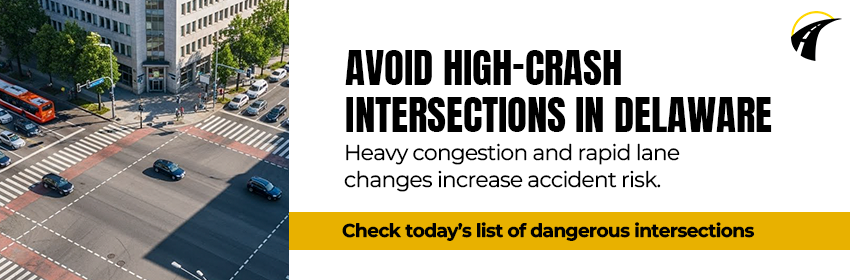
Understanding these high-crash locations, their causes, and contributing factors is essential for drivers, pedestrians, and local policymakers alike. We will rank Delaware’s most dangerous traffic spots based on recent crash data, offering insights to help you stay safer on the road.
Delaware’s Top 20 High-Crash Spots
1. I-95 & DE-7 Interchange – Newark
This heavily trafficked interchange recorded 12 fatal crashes and 14 fatalities from 2018 to 2022. Frequent congestion and weaving conflicts challenge drivers navigating trucks and passenger vehicles. Poor lighting and rain reduce visibility, while rear-end and sideswipe collisions are common. Signal timing issues and ongoing construction further complicate traffic flow, making this interchange particularly hazardous.
2. DE-1 & DE-273 – Newark
Between 2018 and 2022, this busy arterial saw 10 fatal crashes and 11 fatalities. High pedestrian and bike activity near shopping centers and schools creates conflicts with turning vehicles. Speeding and signal violations contribute to frequent angle collisions, and poor lighting and crosswalk visibility increase risks during dark hours. Traffic surges during holidays exacerbate congestion.
3. US-13 & DE-9 – New Castle
This high-volume intersection experienced 11 fatal crashes and 12 fatalities in five years. Commuter and freight traffic mix, causing frequent lane changes and turning conflicts. Fog and heavy rain reduce visibility, while poorly marked crosswalks and local events add unpredictability. Rear-end and sideswipe collisions are most common.
4. I-495 & DE-141 Interchange – Wilmington
From 2018 to 2022, 13 fatal crashes led to 15 fatalities at this complex interchange. Multiple merging lanes and high-speed traffic, combined with aggressive driving, cause rear-end pileups. Wet roads, fog, and heavy truck traffic amplify the danger. Inadequate lighting and ongoing roadwork increase driver confusion.
5. DE-52 & DE-100 – Greenville
This scenic but narrow road saw nine fatal crashes and 10 fatalities over five years. Sharp curves, limited shoulders, and frequent wildlife crossings cause run-off-road crashes. Nighttime visibility is poor, and pedestrian activity near parks adds risk. Seasonal fog further complicates travel.
6. US-202 & DE-141 – Fairfax
A commercial corridor with heavy commuter and truck traffic recorded 11 fatal crashes and 12 fatalities. Lane changes and turning movements contribute to rear-end and angle collisions. Signal timing problems and poorly maintained pedestrian crossings increase hazards. Construction projects raise congestion and risk.
7. DE-9 & DE-72 – New Castle
This suburban intersection experienced 10 fatal crashes and 11 fatalities. Speeding and red-light running are common; narrow lanes and poor signage contribute to collisions. Crosswalk visibility is low, and winter ice heightens the danger.
8. I-95 & DE-273 – Newark
A major interstate junction with heavy commuter and freight traffic saw 12 fatal crashes and 14 fatalities. Rear-end collisions are frequent due to congestion, while fog, rain, and merging conflicts increase crash risk. Aggressive driver behavior compounds the danger.
9. DE-7 & DE-4 – Bear
This suburban arterial had nine fatal crashes and 10 fatalities from 2018 to 2022. Numerous intersections and turning points, combined with inconsistent signal timing, lead to abrupt stops and angle crashes. Pedestrian crossings near schools add to the hazard, and seasonal fog and rain further reduce safety.
10. US-13 & DE-1 Business – Wilmington
Between 2018 and 2022, 11 fatal crashes caused 13 fatalities. Heavy truck and passenger traffic, frequent lane changes, and turning movements contribute to rear-end and sideswipe collisions. Pedestrian activity is high, and poor lighting worsens nighttime risk.

11. DE-299 & DE-71 – Middletown
This suburban intersection saw 10 fatal crashes and 12 fatalities. Speeding and red-light violations lead to angle and rear-end collisions. Limited pedestrian crossings and seasonal fog exacerbate the risks. Construction detours add additional complexity.
12. I-95 & DE-896 – Newark
A critical interstate interchange recorded 13 fatal crashes and 15 fatalities. Merging conflicts and heavy truck volumes raise the severity of crashes. Fog, rain, poor lighting, and work zones further increase risk, while sudden braking is frequent.
13. DE-4 & DE-72 – Christiana
With 11 fatal crashes and 13 fatalities, this mix of commercial and residential traffic experiences rear-end collisions caused by signal timing and lane changes. Pedestrian crossings are frequent but poorly marked, and heavy truck traffic adds complexity. Seasonal fog worsens driving conditions.
14. US-13 & DE-299 – Smyrna
This suburban arterial saw 10 fatal crashes and 11 fatalities. Speeding, abrupt turns, and limited shoulder space increase angle and rear-end collision risks. Pedestrian activity near schools adds to hazards, and rain reduces visibility.
15. DE-1 & DE-7 – Pike Creek
High-speed arterial with 12 fatal crashes and 14 fatalities. Merging conflicts, poor lighting, wet roads, and limited pedestrian crossings elevate risk. Freight traffic increases crash severity, especially during peak hours.
16. I-495 & DE-4 – Christiana
A busy interchange recorded 13 fatal crashes and 16 fatalities. Complex weaving, truck-passenger vehicle mix, fog, rain, and construction all contribute to crashes. Driver impatience and aggressive maneuvers further elevate risk.
17. DE-9 & DE-72 – New Castle
This suburban intersection had 11 fatal crashes and 12 fatalities. High pedestrian activity, signal violations, and speeding increase the likelihood of rear-end and angle collisions. Seasonal weather further reduces safety.
18. US-13 & DE-7 – Wilmington
With 12 fatal crashes and 14 fatalities, this commercial corridor is busy with lane changes and signal violations. Pedestrian crossings are frequent, while poor nighttime lighting and peak-hour congestion amplify hazards.
19. I-95 & DE-896 – Newark
This high-speed interstate section saw 14 fatal crashes and 15 fatalities. Merging conflicts, poor lighting, weather, and construction zones increase crash frequency. Aggressive driving is common, and emergency response times vary.
20. DE-4 & DE-7 – Bear
A suburban arterial experienced 11 fatal crashes and 12 fatalities. Numerous access points, signal timing issues, pedestrian crossings, seasonal fog, and rain contribute to frequent rear-end and angle collisions. Speeding adds further risk.
Common Causes of Delaware’s Car Accidents
Delaware’s most dangerous crashes often stem from a mix of driver behavior, roadway design, and environmental factors. Aggressive driving, including speeding, tailgating, and improper lane changes, plays a significant role in many collisions. Congestion at busy intersections and highway interchanges leads to frustration, causing some drivers to take risks like running red lights or making unsafe turns.
Weather conditions are another major contributor. Delaware’s frequent rain and occasional fog reduce visibility and road traction, especially on poorly maintained surfaces. This increases the risk of rear-end collisions and run-off-road crashes. While less severe than in northern states, winter weather still causes hazardous icy patches, especially on bridges and shaded areas.
Road design and infrastructure also influence crash patterns. Intersections with outdated or poorly timed signals can cause abrupt stops and driver confusion. Narrow shoulders, limited pedestrian crossings, and inadequate lighting further exacerbate safety issues. Construction zones, while necessary, create temporary hazards with shifting lanes and unclear signage.
Finally, pedestrian and cyclist safety remains a concern. Many high-crash locations are near schools, shopping centers, and transit stops where foot traffic is heavy. Lack of visible crosswalks, insufficient signals, and distracted drivers increase the chances of serious pedestrian collisions.
The Help of a Delaware Personal Injury Lawyer When You Need It the Most
Navigating Delaware’s busiest and most dangerous roadways requires awareness and caution. Understanding where the high-crash spots are and the common risks involved can help drivers anticipate hazards and adjust their behavior accordingly. Whether commuting through congested interchanges or crossing suburban intersections, vigilance saves lives. Defensive driving, safe following distances, and avoiding distractions like texting or phone use are critical to reducing accidents.
Local authorities continue to invest in infrastructure improvements, better signage, and enforcement initiatives to reduce crashes. However, individual responsibility remains crucial. Avoid aggressive driving, respect traffic signals, and stay alert, especially during adverse weather.
Practicing patience and following posted speed limits helps protect everyone on the road. Public awareness campaigns educate drivers on the specific dangers at these high-risk locations, emphasizing cautious behavior to reduce collisions and save lives. These efforts aim to create safer roads for Delaware’s communities and future generations.
If you or a loved one is involved in a crash, Local Accident Reports is here to help. We connect victims with experienced Delaware personal injury attorneys, assist in obtaining official accident reports, and guide you through the following steps. Call (888) 657-1460 now for immediate support and trusted advice. Early action can protect your rights and improve your chances of fair compensation.